Worried your preschooler’s grip looks awkward? How to teach a child to hold a pencil starts with play, not drills: most children reach a tripod grasp between 3 and 5 years old, and a comfortable grip matters most.
Pencil grip is one of the fine motor skills on the broader preschool skills checklist, so it helps to see it next to the other things children build before school.
| Grasp stage | Typical age |
|---|---|
| Whole hand grasp | 12 months-1.5 years |
| Digital pronate grasp | 2-3 years |
| Quadrupod (four-finger) grasp | 3-4 years |
| Static tripod grasp | 3.5-4 years |
| Tripod grasp emerges | between 3 and 5 years old |
These ages come from Salus University’s 18 March 2021 post on pencil grasps and The OT Toolbox’s page on pencil grasp development. They are typical ranges and the figures can change, so check the sources before you rely on them.
How pencil grasp develops
Grasp development follows three main stages: primitive, transitional and mature, as described by The OT Toolbox. The same page says the pattern is fairly predictable but the timing can vary from child to child.
- Primitive: the whole arm moves the pencil. This covers the whole hand grasp (12 months-1.5 years) and the digital pronate grasp (2-3 years).
- Transitional: the forearm or wrist moves the pencil. Examples are the quadrupod grasp (3-4 years) and the static tripod grasp (3.5-4 years).
- Mature: the fingers or hand do the moving, which gives the child finer control.
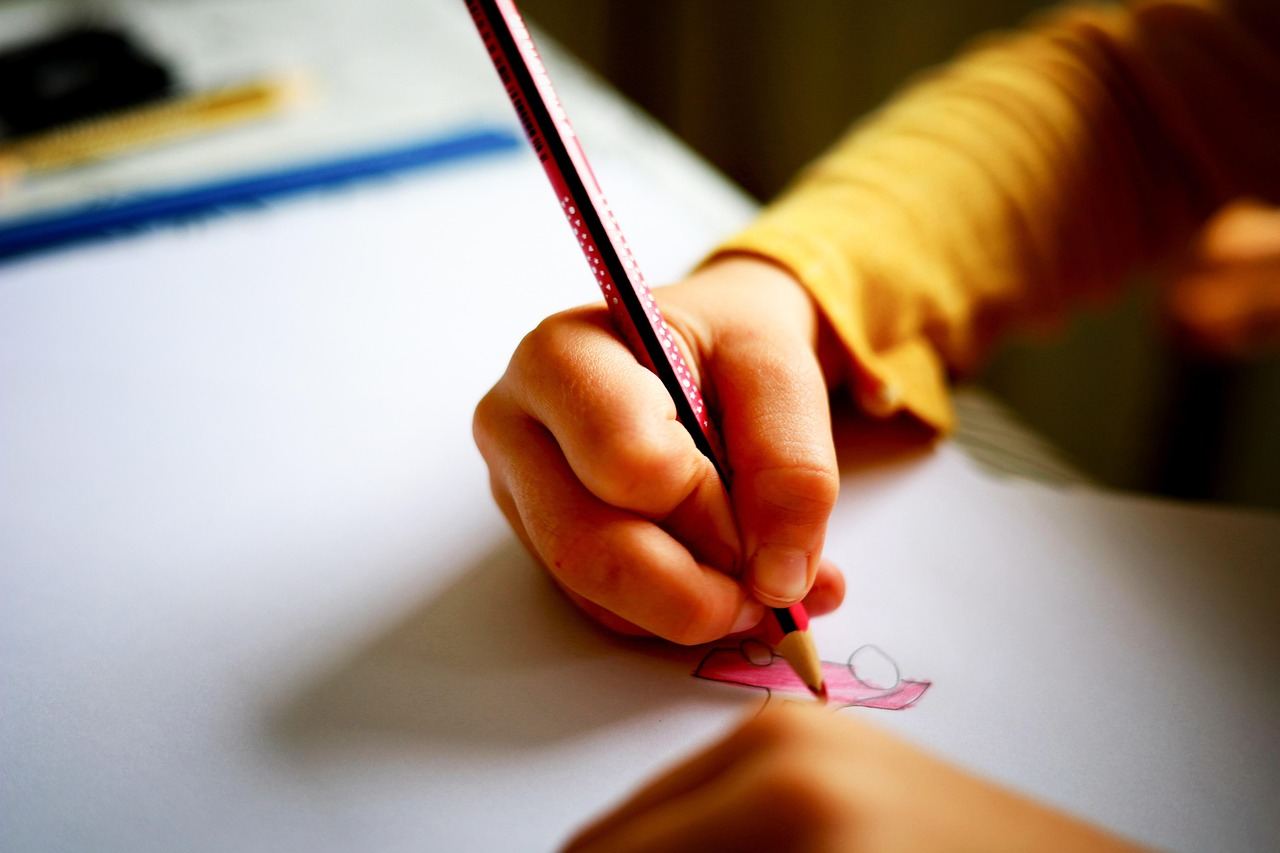
The tripod grasp is the one most similar to an adult grip. The pencil sits between the thumb and index finger while the middle finger gives stability, and Salus University says it emerges between 3 and 5 years old.
Does your child need a perfect tripod grip?
Not necessarily. The Salus University post points out that not all children develop the tripod grasp. What counts most is a functional grasp: handwriting that is legible, with no pain or fatigue while writing.
The OT Toolbox agrees that a functional pencil grasp is perfectly fine for children. It lists other functional grips, including the thumb wrap, thumb tuck, inter-digital brace and finger-wrap grasps.
A quadrupod grasp uses four fingers on the pencil. The same page explains that the extra finger can add stability that supports efficient handwriting, and that whether to nudge a child toward a tripod grip is up to each individual.
Play-based ways to build a stronger grip
Salus University suggests keeping practice light and playful. These ideas need no special equipment, and they all come from the Salus University post.
- Break crayons into small pieces for your child to color with.
- Have your child pick up small items, such as pom-poms, with tweezers or a clothespin.
- Encourage the thumb, index and middle fingers to do the squeezing, and keep the last two fingers tucked in.
- When holding a pencil, let your child hold a pom-pom in the last two fingers so those fingers stay out of the way.
- Encourage your child to rest the pinky side of the hand on the paper while writing and coloring for extra stability.
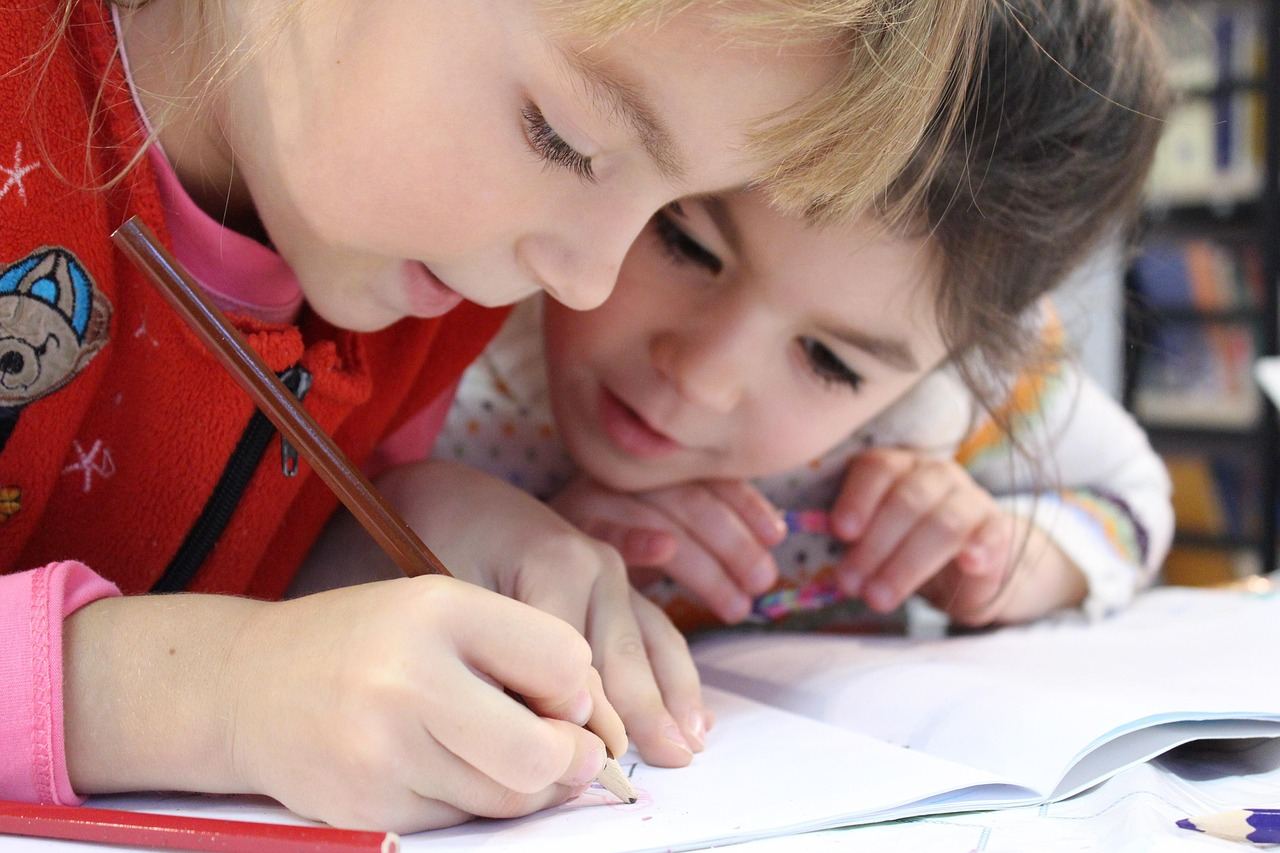
Short, cheerful sessions tend to work better than long ones. Let your child choose the colors or the picture, and stop while it is still fun.
Fitting pencil practice into everyday routines
Drawing time is a handy moment for other early skills. For listening practice, you can read the guide on how to teach a child to follow directions, then try a one-step request such as “draw a circle.”
Hand control also comes into everyday routines such as dressing, which you can read more about in the guide to self-care skills for preschoolers. Small daily jobs and play both give fingers a chance to practise.
When to ask your child’s doctor or school
This guide is general information, not medical or developmental advice. If your child seems to be in pain while drawing, tires quickly, or you are unsure about their progress, talk to your child’s doctor or school.
They can look at your child as an individual, which a general list of ages cannot do.
Frequently asked questions
At what age do children hold a pencil with a tripod grip?
Show answer
Many children settle into a tripod grip somewhere between 3 and 5 years old, according to Salus University. Timing varies, and some children never use it.
Should I correct my child’s grip every time?
Show answer
The sources stress comfort and legible writing over a textbook grip, so gentle play usually fits better than constant corrections. If something worries you, ask your child’s doctor or school.
Is a four-finger grip wrong?
Show answer
No. The OT Toolbox describes it as a functional grip and says moving a child away from it depends on the individual.
What can I do at home without special tools?
Show answer
Snap a crayon into short stubs, or use a clothespin to move pom-poms from one bowl to another, as suggested by Salus University. A few minutes of play is enough.