Looking for counting activities for preschoolers that fit a busy day? Count what you already have, like snacks, stairs and socks, touch each item once, and ask “How many?” Short and playful beats long and formal.
Counting is one of the skills covered in the wider preschool skills checklist, which puts it alongside the other early school skills.
| Counting skill | Value |
|---|---|
| Counting aloud by 60 months | At least 20, by ones |
| Number words said in order (early stage) | Up to 10 number words |
| Recognising a small set without counting | Up to five objects |
| Counting scattered objects accurately | As many as five objects |
| Comparing two groups (more, less, same) | Up to at least five objects |
| Matching a quantity to a written numeral | Numerals 0-5 |
These figures come from the Head Start preschool math progression. Guidance like this can change, so check the source before you rely on them.
What does counting actually involve?
Counting is more than reciting numbers. Head Start guidance says it requires several distinct skills, including reciting the number-word sequence while keeping one-to-one correspondence between the objects and the number words, as described in its counting and cardinality practices.
In practice, your child is learning three things at once:
- The number names, in a fixed order.
- One number name for each object, with no skipping and no double counting.
- The idea that the last number said tells how many there are.
That last idea has a name, cardinality. The Head Start progression describes it as understanding that the last number said represents the number of objects in a set, as laid out in the math progression.
The landmarks in the table above are milestones to watch for, not a test. Children arrive at them at different speeds, and playing with numbers is the best way to get there.
Everyday counting activities for preschoolers
The easiest games cost nothing. Head Start suggests making counting part of everyday routines, such as setting the table or working out how many people are in a play area, in its practice guide.
- Table setting: ask your child to put out one napkin and one cup per chair, an idea from an Illinois Early Learning Project tip sheet.
- Stairs and steps: count each one aloud on the way up, then guess the count for the way down.
- Snack time: count out grapes or crackers, then ask whether anyone has more.
- Tidy-up: count toys into the box, one at a time.
- Shoes and socks: line them up in pairs and count the pairs.
Do not worry about perfect counts. Head Start guidance encourages adults to model counting through the day and invite children to correct themselves, so a gentle “let’s try again together” is enough.
Games with dice, cards and songs
Once routines feel easy, add a little play. Head Start lists number games such as board games with a spinner, a die or dice, plus dominoes, number blocks, and cards and puzzles with numbers, in its counting practices.
- Dice race: roll one die, count the dots, then move a token that many spaces.
- Dominoes: match ends and count the dots on each half.
- Card games: the Illinois tip sheet names Go Fish, War (Top That) and Animal Rummy as games to teach, as shown in its beginning numbers tip sheet.
- Treasure hunt: hide a set number of toys and ask your child to find them all.
Music helps too. Head Start recommends counting songs, finger plays and children’s books with numerical content as a playful context for practising counting and cardinality, according to the same guide.
Moving small counters, pegs and buttons also trains little hands, and the guide to fine motor activities for preschoolers has more ideas that pair well with counting games.
How can you make counting easier or harder?
Start small and build up. Head Start advises giving children many chances to count small groups of objects and moving gradually to larger groups, per its practice guide.
- Line up a few objects, such as blocks or buttons, in a row.
- Show your child how to touch each one, or slide it aside once counted. Head Start lists these as counting strategies in the same guide.
- Ask “How many?” and let your child give the last number said as the answer.
- Scatter the objects. The progression expects accurate counting of as many as five objects in a scattered arrangement, as the Head Start progression describes.
- Make two piles and ask which has more, which has less, or whether they are the same.
Step five matches a later stage. The same progression describes telling whether one group is more than, less than or the same as another for up to at least five objects, in the math progression.
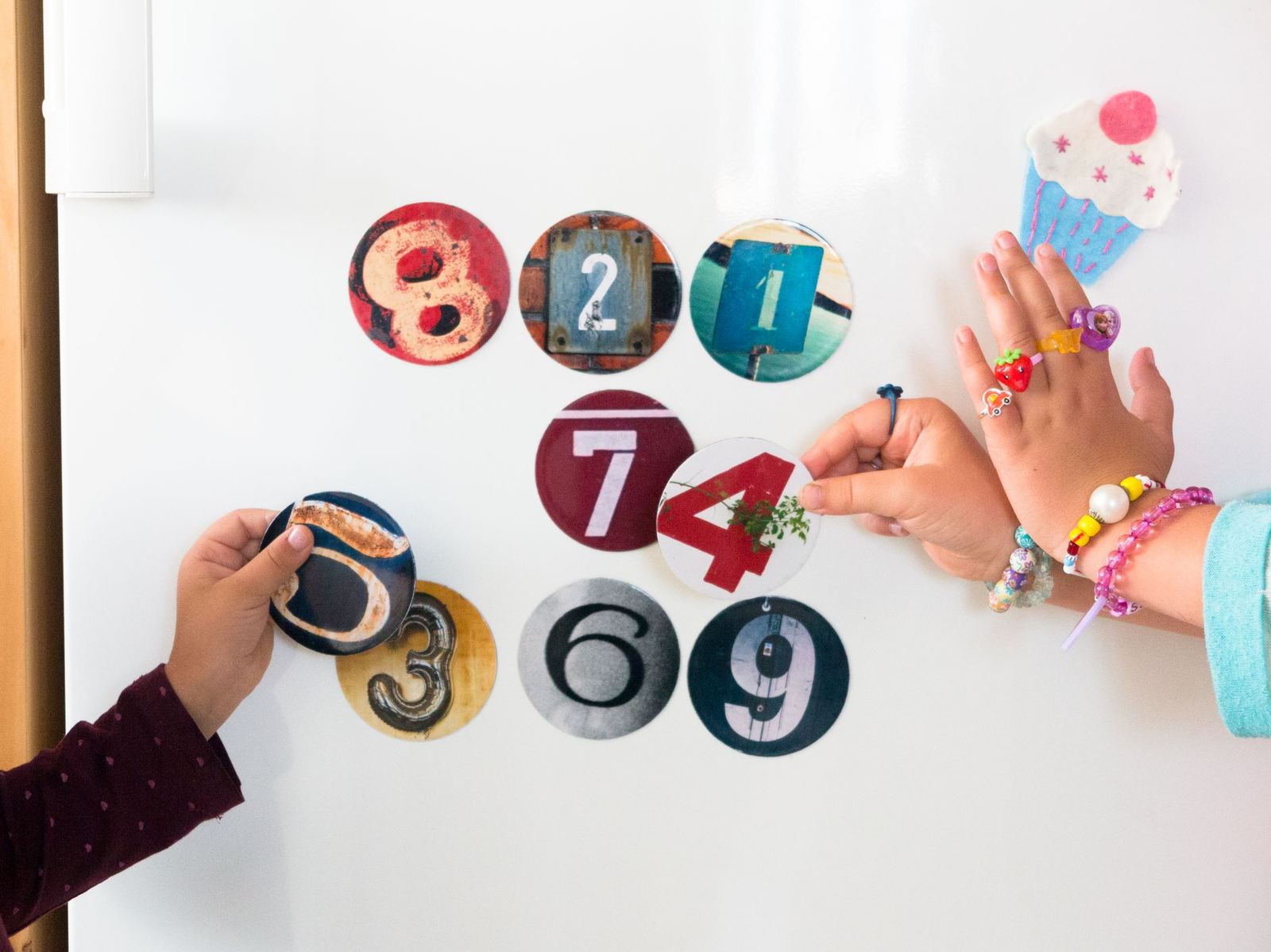
Written numbers come next. Children are expected to link a number of objects with a written numeral 0-5, according to that progression, and number cards or labels around the house can help. Many of the same print-spotting ideas appear in the guide to letter recognition activities for preschoolers.
Words and questions that help most
The question “How many?” does a lot of work. Head Start says it encourages children to count, compare which has more and which has less, and talk about quantity, in its counting guide.
Number vocabulary matters as well. The Illinois tip sheet suggests words such as amount, enough, none, before/after, most, pair and take away, as listed in its tip sheet.
Try weaving them into talk you already have:
- “Is there enough for everyone?”
- “Which pile has the most?”
- “What comes after four?”
- “If we take away two, what is left?”
When should you check in with someone?
Children learn at their own pace, and a website cannot tell you how your child is doing. If something about your child’s counting or learning worries you, talk to your child’s doctor or teacher.
Frequently asked questions
How long should a counting session last?
Show answer
Keep it brief and repeat it often. A federal teacher toolkit built on a practice guide recommends setting aside time each day for math and weaving it through the whole day, according to the IES math toolkit. At home, that can simply mean a minute at snack time and another at bedtime.
My child skips numbers or counts the same thing twice. Is that normal?
Show answer
Slips are common, because counting combines saying the words with matching each one to an object. Slow down, touch each item together and recount with a smile. If it keeps worrying you, mention it to your child’s teacher or doctor.
Do I need to buy special materials?
Show answer
No. Buttons, spoons, pasta shapes and blocks all work, and a pack of cards or a die adds variety. Library books with numbers in them are another easy option.
Should my child be writing numbers yet?
Show answer
Writing usually comes after counting feels comfortable. The Head Start progression describes recognising, and with support writing, some numerals up to 10 at its final stage, as set out in its preschool math page. Drawing dots or tally marks is a fine first step.